

On the Outside Looking In .3
Germany and Berlin

While this was my first time in France, it was not my first time in Germany, having visited friends and family roughly seven years ago. Our only hitch getting there was departing Nantes - the train was delayed by enough to miss our connection, resulting in me reading up on the EU’s rights of travellers related to trains, etc., which the German rail system de facto spelled out and the French one referenced. The results were mixed - the German crew let us sit in the dining car as otherwise it would be standing room only, and while we were still late, the later train made an additional stop closer to the friends picking us up. We spent two days decompressing and taking care of laundry, picking up our rental car, and doing some grocery shopping.
The latter was interesting in that it confirmed a few things we’d already seen in Paris - namely the fairly low prices for groceries. Eggs at the time were half of what we pay here, and that was considered high. The Yoplait yogurt we picked up at a small shop was significantly different from anything in the states under that brand. Several other brands that our friends directed us to were inexpensive, and yet the ingredients list was as sparse as it should be, with a minimum of, if any, weird fillers, thickeners, and so forth. Eve things that are supposed ot be the same product - Haribo gummy bears, for instance - are not the same. In the US, they contain high fructose corn syrup, but in Germany, it’s sugar and glucose syrup. And yes, they do taste different.
The rental was nice too: a VW Taigo. We were originally slated for something larger, but because of the parking available at the hotel in Berlin, needed something lower, and a passat wagon would have simply been too long. It had a stick shift, the auto stop-start could be thankfully disabled with a single button press, and was stable at speeds up to 110 mph.
The whole “unlimited” thing was fun, but not as much as I would have hoped. Part of it is being an adult, likely, but part of it I think was also the fact that when I was enamored of the concept of an unlimited autobahn in my teens, the speed limits in the US were 55 mph, not the current 70 (110 kph) . Also, it’s only the autobahn that has unlimited stretches. Default city speed limits unless overridden by signage is 50 kph (30 mph), rural roads is 100 kph, and 130 is the suggested autobahn limit, again, unless otherwise overridden. And near cities, a lot of it is, either with permanent or dynamic electronic signage.
Basically, where there is a speed limit on the autobahn, that limit is between 60 and 80 mph, and where there isn’t a legally enforced limit, you can go as fast as you like. If you fuck up though, going faster than 130 opens you up to additional liability. And a lot of cars have governors capping them to around 240.
Which didn’t stop me from getting blown by a number of times by cars doing well over the 170-175 I was clocking much of the way to Berlin.
Berlin
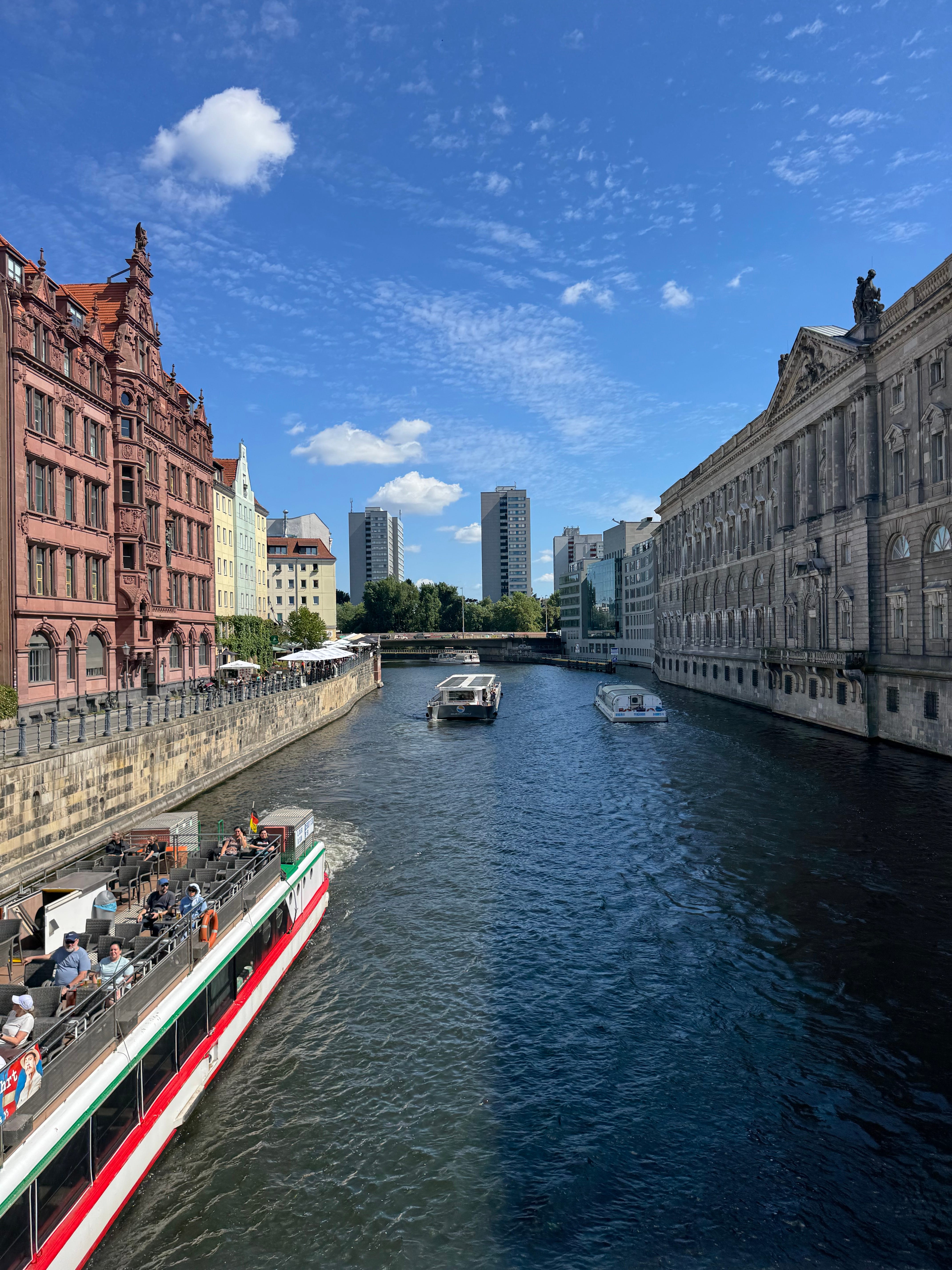
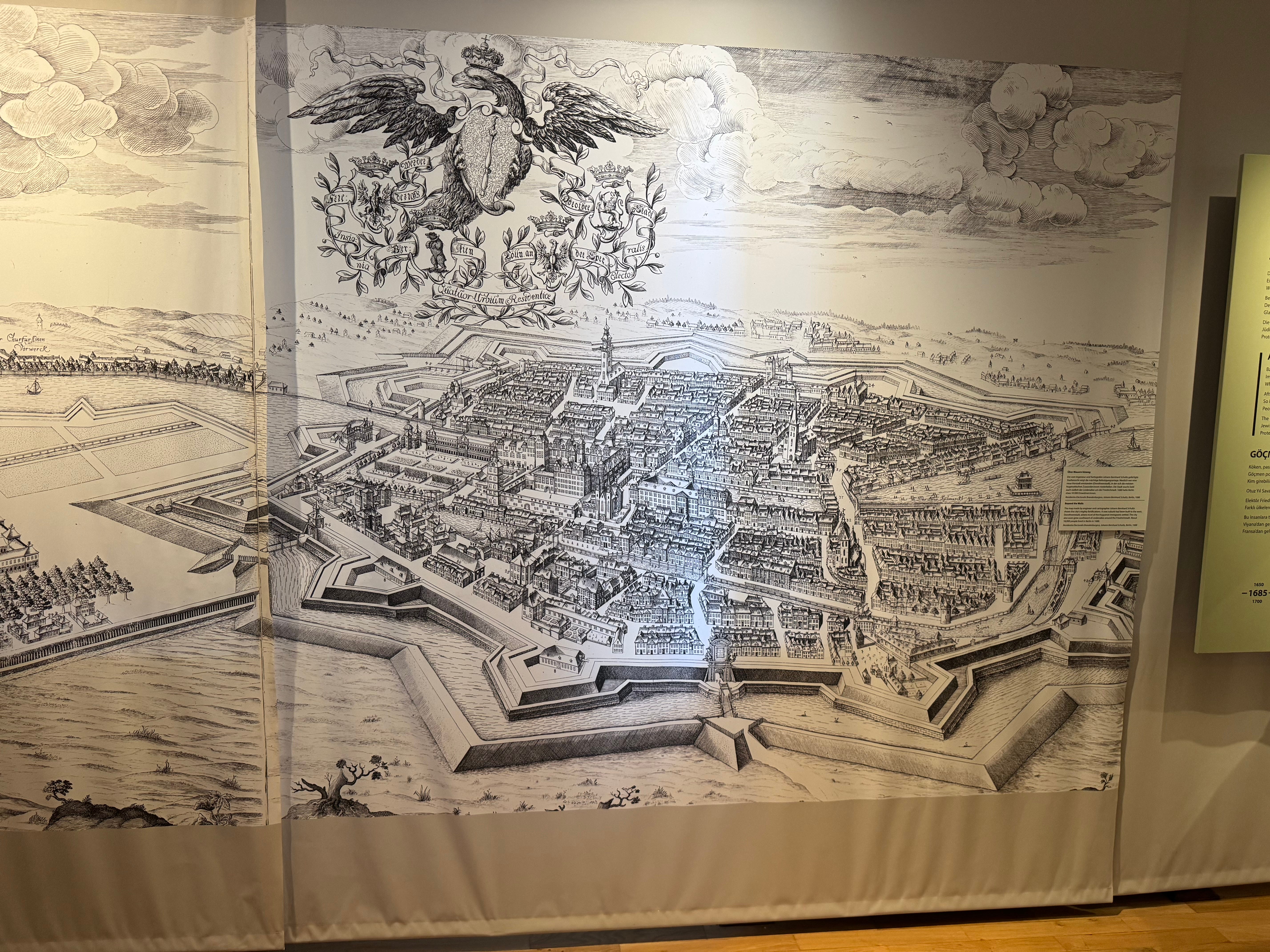
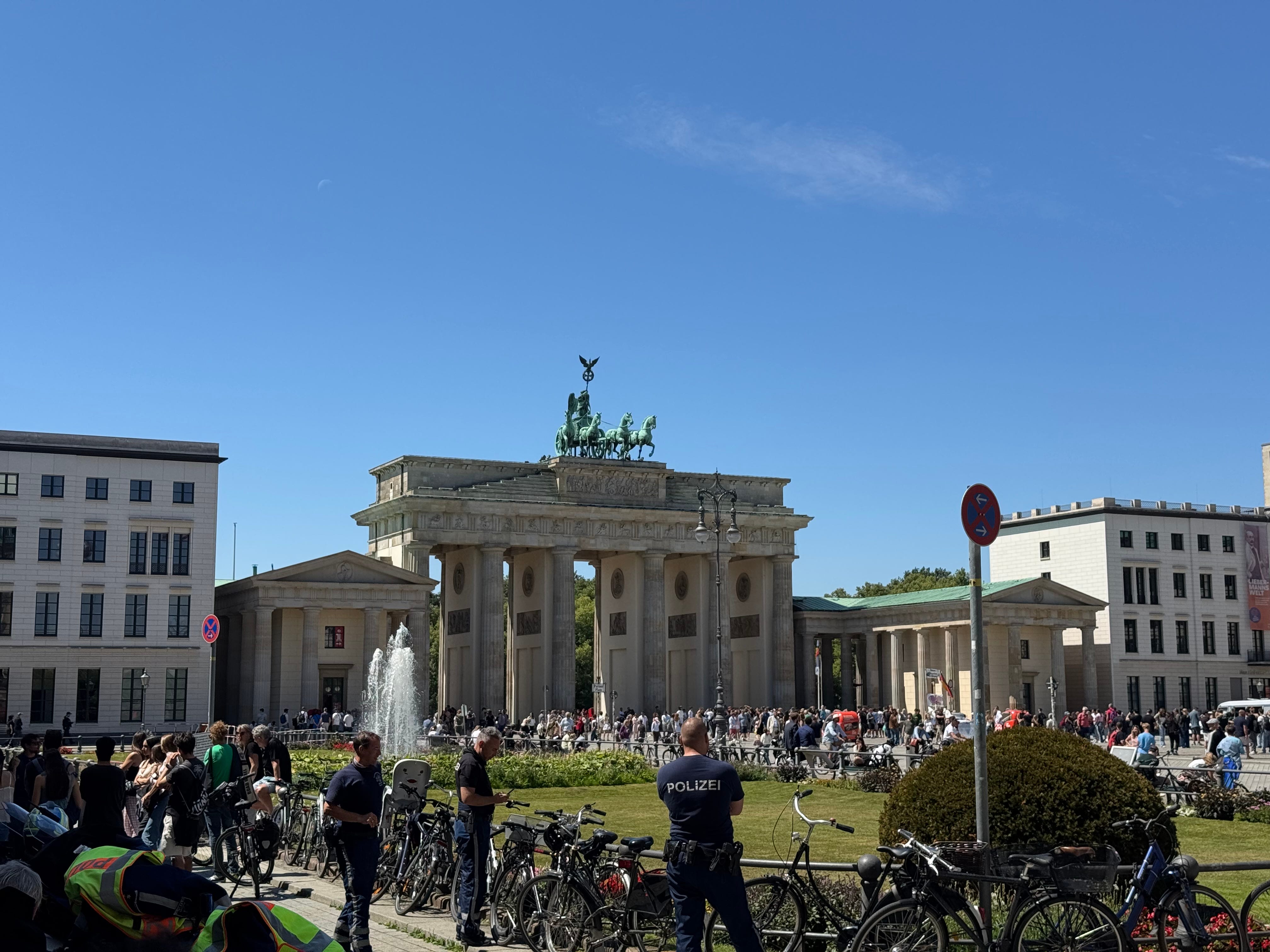
From a historic standpoint, at least pre WW2 history, most anything interesting in Berlin was in East Berlin. The core island and set of blocks that formed the twin towns that later became berlin were on the east side, as well as the (now) museum island, the Rotes Rathaus, the Brandenburg gate, and other famous points of reference. This is also true of WW2 history as well.
Unfortunately, Berlin did not feel German. It also, more so than the rest of the country, was wracked with guilt, and was utterly in your face about it.
By the first, it’s that, as my brother who’d lived there seven years observed, you don’t really need to know German to get by in Berlin. From a work and business standpoint, so much there is done in English, the shopkeepers all know English, English menus were universally available, and in some cases, signage was English first. Much like my impression of Miami though, it’s not the prevalence or even primacy of a foreign language, but the very different cultural attitudes, partly a holdover from the days when west Berlin was a haven for draft-dodgers, and largely due to the very multicultural nature of the city.
As to the wracked with guilt - it goes hand in hand with some of the cosmopolitan attitudes. Damn near everything reminded you about the Nazis and their evils. The Stasi and east german police couldn’t be avoided, but despite an arguably more totalitarian and authoritarian system where a fifth of the population worked for or informed for the secret police, with a dossier on 1/3 to 1/2 the country, where people were gunned down for trying to escape, it didn’t have the stigma, so various guides were willing to make excuses for East Germany: they made sure pensioners had homes and food, and so on. Please to ignore that similar excuses could be made for the National Socialists, who were indeed socialists.
Aside. An authoritarian system that enforces its laws can be tolerable if it’s not totalitarian. If they’re death on robbers, don’t rob, you’re OK, but they’ll leave you alone over what you choose to drink, or think. In totalitarian systems, including modern critical-whatever offshoots of progressivism, socialism, communism (also socialism), and national socialism, you not only have laws enforced, but everything is subject to said law. Nothing outside the state.
The museum dedicated to life in Berlin through the ages was disappointing. Not horrible per se in terms of being a museum, the artifacts on display were plentiful, and it went into the history. I even understand there being less focus on major historic figures. No, it was the need to shove a woman into anything they could. Need a made-up “sample character” from the 1500’s?
Perhaps her name was Mechthild and she fled with her entire family from war and flooding somewhere on the Elbe River.
She built a new life for herself in Berlin. Mechthild worked, tended the livestock, cooked, and comforted her children.
There was little time for herself, even in the evening.
She mended the clothing or processed wool.
There are no pictures of the early settler.
This in concert with other blurbs could not be more the “life sucks for the guys, women most affected” meme. Or:
In 1551, heavy storms laid waste to the fields.
Even the church tower of the Nikolaikirche was badly damaged.
Rumors soon spread that a witch had conjured the bad weather.
A woman was accused, but her name has not survived.
She was interrogated, tortured, and publicly burned at the stake in 1552.
But the bad weather, crop failures, and disease continued.
No image exists of the accused weather witch.
Young woman, Gerard David, late 15th/early 16th century, The Print Collector/Heritage Images
or, when showing “torture” and punishment devices, showing a scolds bridle…
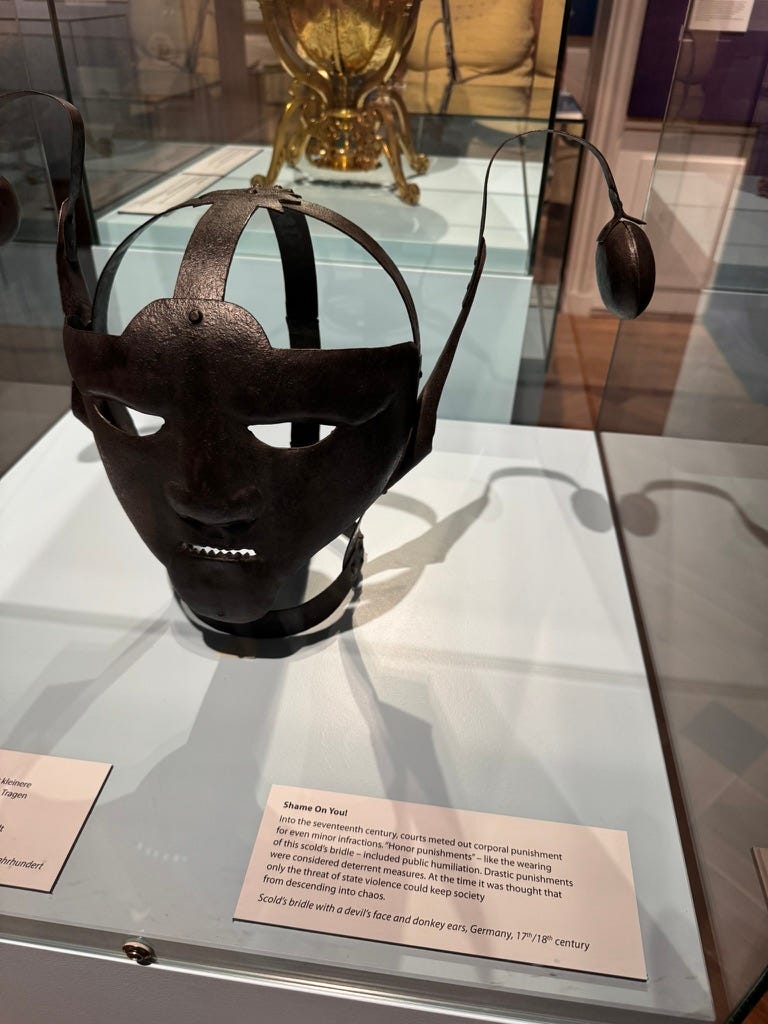
Into the seventeenth century, courts meted out corporal punishment for even minor infractions. “Honor punishments” - like the wearing of this scold’s bridle - included public humiliation. Drastic punishments were considered deterrent measures. At the time it was thought that only the threat of state violence could keep society from descending into chaos.
Scold’s bridle with a devil’s face and donkey ears, Germany, 17’/18t century
And on, and on. Displays and paintings about immigrants, and how important they are, and how they suffered hardship, as well as key figures in advocating for sexual minorities. Women ans immigrants were great, German men, look how backward they were. You’d think no native born German man did anything good.
Further aside - tour guides will now tell you how the Nazis broke in and burned a bunch of sexual research into gay and trans sexuality, but treat it as some horrible thing that only bigots could find fitting. I’m not sure Berlin was much better than a number of French philosophers on all this, though.
For people used to the very spartan protestant churches in the US, the protestant cathedrals and churches came across as very Catholic-coded.
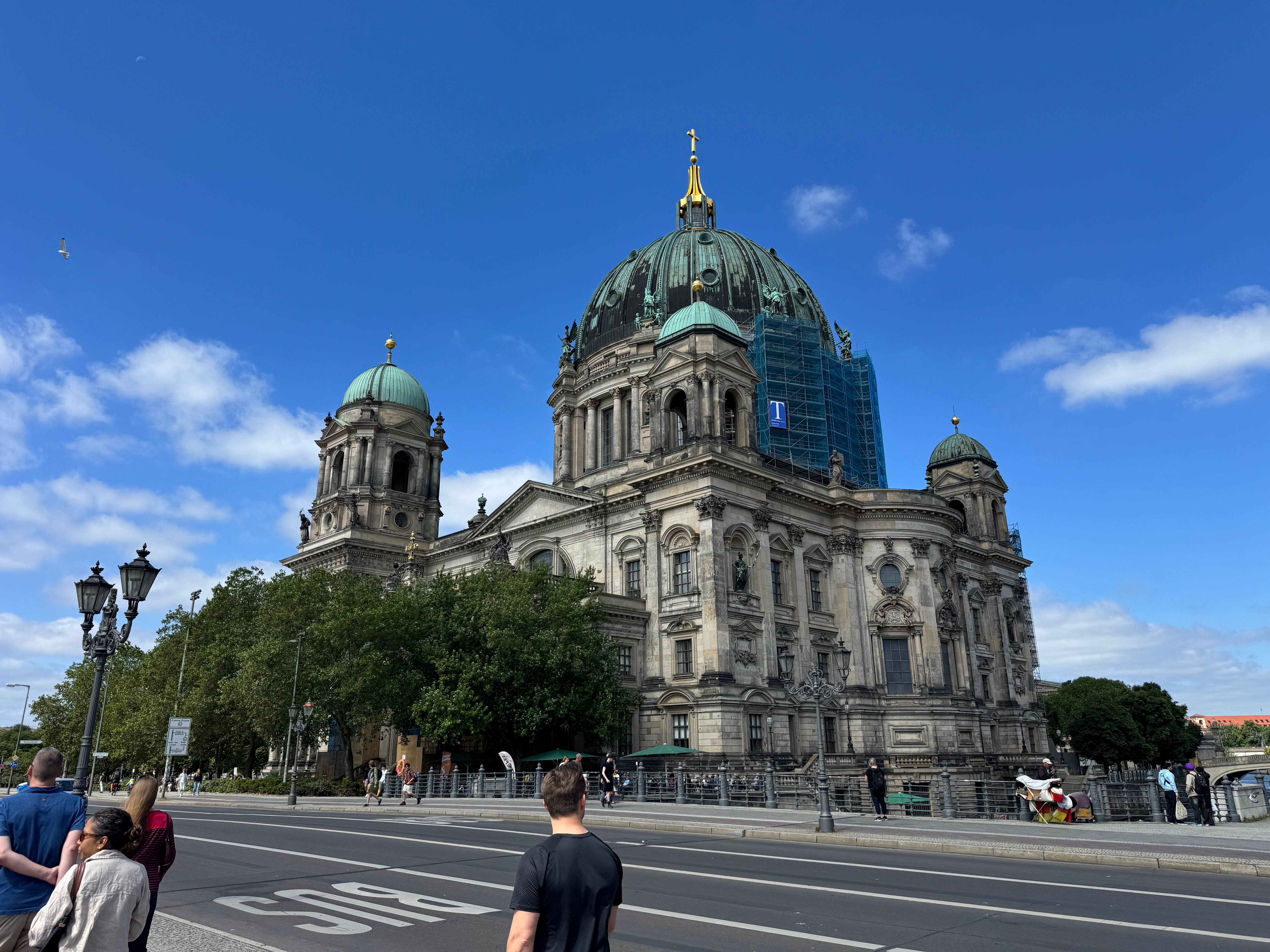
We did find a few places to get German food, including one restaurant in what was once a square of public judgement and punishment.
I’m glad I went, but for all of their issues, the Germans I know outside of berlin are sane.
More in the next one.
Meet Our Friends
The Last Redoubt is a reader-supported publication. To receive new posts and support my work, consider becoming a free or paid subscriber.
Please also join the Pilum Press Discord and/or the Autarch Discord. Pilum is the publisher of several books and short story collections including Shagduk and Thune’s Vision. Autarch is the home of the Adventurer Conquerer King RPG.
There's a "two paths diverged in a wood" trope in play here. Crossed with two countries whose trains are both late, but late differently.